The Emotional Toll

Some days I completely forget I’m sick. Other days it’s all I can think about. A few times in the last few months I’ve broken down crying in the hematologist’s office. Sometimes when I’m stuck on a thought, the nurses and doctors at the center tell me I’m lucky and it could have been much worse. While that may be true, is that supposed to be comforting? Does hearing that ever actually make anyone feel better? Why are we so quick to compare other people’s tragedies with “the big picture”? All it does is trivialize what the person is thinking and feeling and going through. Doctors seem to think that as long as a patient isn’t terminal, they’re “lucky”. I certainly don’t feel lucky.

Beyond medical personnel, some people have been quick to downplay my diagnosis and suggest causes for my immune system failure – diet, exercise, stress, genetics, etc. All I can figure is that no one wants to believe they could just wake up tomorrow to discover their immune system is shutting down and destroying itself without any cause or warning. So they trivialize. And make excuses. And rationalize the situation so as not to worry themselves. But that’s the reality of what happened to me. And trivializing it leaves me feeling guilty about something completely out of my control. This happened TO me, not BECAUSE OF me. Even still, I’m supposed to be able to trust my body to work properly and instead my immune system literally turned against me overnight.

Why can’t medical personnel hear bad news and just say “I’m so sorry this happened to you” or “that sucks” or “nobody deserves that”? Why are we so quick to write someone off just because things “could have been worse”? That hardly changes the fact that they could have been infinitely better – I could not be sick at all. It might just be me, but hearing how much worse something could have been isn’t comforting. It focuses on “if/when” scenarios, which my mother always taught me to avoid. Growing up, she wouldn’t even answer or acknowledge a question my sister or I had if it started with “if” or “when”. She didn’t want us living in hypotheticals. At the time it was extremely frustrating, but now I find realism to be a comfort. Blind optimism makes it THAT much harder to cope when something does go wrong. And spending time focused on the hypothetical only serves to distract me from the real problem at hand. So while I appreciate that the nurses are saying whatever they think will make me feel better, I really wish they would stop telling me I’m lucky.

I believe everyone has their own breaking point – their own tolerance for pain, destruction, heartbreak, etc. I hit mine years ago. So who am I to tell someone what they should be feeling? Even if I’ve been in their shoes, the way people handle bad news varies greatly from person to person. It’s based on past life experiences in relation to the current situation. Just because two people handle information and bad news differently, doesn’t mean either person is wrong. We can’t compare ourselves to others. We all have a basic human need to feel validated. I need to know it’s okay to be upset. My diagnosis is devastating for ME and that should be all that matters.

In general, people often tell me to put things into perspective. In other words, “there are people dying in Africa – this isn’t that bad”. I wish humanity would stop generalizing these things. Putting things into “perspective” means relative to my own experiences. Comparing a chronic diagnosis with starvation and disease in Africa makes no logical sense to me because it’s too hard to relate to. It’s like comparing apples to oranges. I can only compare my diagnosis to the other things I have been through in MY life. And while I have fought my way through some crappy situations, they were one-time occurrences. The hardest part was healing emotionally, but time was on my side. As the years went by, emotions were easier to control and memories began to fade. Therapy helped to make things easier to understand and I learned valuable ways to cope with the painful memories. Ultimately, though, the painful thing was just that – a memory. It was in the past. My only responsibility going forward was to heal.

This diagnosis though is nothing like that. It is a constant work in progress. It isn’t going to “go away in time”. It isn’t going to become some distant memory as I get older. My treatments and appointments will become less frequent when I’m in remission and I will hopefully be able to go years without treatment, but there is no “cure”. There is no end date. No one can definitively say how long remission will last or when my next hospital stay will be. The unpredicability and uncertainty terrifies me. The best I can hope is that time will make the emotional impact this has had on me easier to handle. “Time heals all wounds”, but time will not heal this

The Plush Blood Cells

img_7155

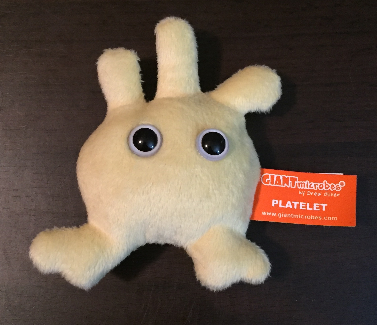
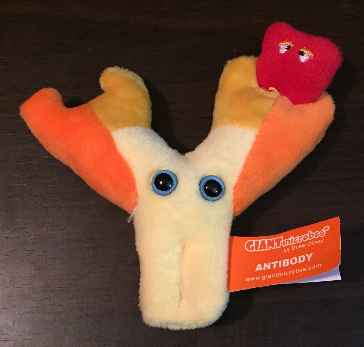
For my birthday last month, my husband bought me this set of plush blood cells that he stumbled across online.  Before I unwrapped the gift, he warned me I would either find it hilarious or I would get really mad at him for buying me what he considered a “gag gift”.  I didn’t think of it as a gag gift at all.  It’s probably one of the most thoughtful gifts I’ve ever received!  He told me I should carry around the platelet so I always have at least one.  He also thinks maybe the little plush cells will bring me good luck.  So far, his theory is holding true!

My husband also suggested we buy my hematologist a set as a thank you for essentially saving my life and sticking with me through treatments.  I brought him a set on September 13th and he went bananas for them!  He was like a little kid with candy.  He started talking about how he could use them to teach his students and then proceeded to show them off to the other doctors and staff at the hematology center.  I was really excited he didn’t already have a set!

When I saw him a couple weeks after the fact, he said he had texted a picture of the gift to all his “nerdy hematology friends” and a few had even bought themselves a set for teaching.  Below are close-ups of the three plush cells that play a role in my diagnosis: red blood cells, platelets, and antibodies (these attach to my red blood cells and platelets and prematurely mark them for destruction).

RED BLOOD CELL

rbc

PLATELET

platelet

ANTIBODY

antibody

The Early Taper

Things are going even better than expected!  I have no spontaneous bruising or bleeding and my platelets today were at 96,000 (hemoglobin at 13.1).  I asked the hematologist how my platelets could have gone UP after lowering the Prednisone and he said he had no idea, but he didn’t want to jinx it.  He said not to read into it and to just be happy.  I am definitely okay with that!  Because my platelets are responding so well to the decrease in Prednisone, he tapered me AGAIN!  A week early!  I start 20mg a day tomorrow and then I see him in two weeks (October 19th) for a follow-up and, presumably, the next taper.

The Taper Schedule

Now that my procedure is over, my hematologist was finally able to taper my Prednisone!  Today was my first day on 30mg, instead of 40.  I am anxious to see if my numbers hold when I see him next Wednesday (October 5th).  I have a good feeling about it!

This week’s numbers were pretty standard: platelets of 85,000 and hemoglobin of 13.3.

If all goes as planned and my numbers stay consistent, here is the tentative taper schedule:
30mg – 2 weeks
20mg – 2 weeks
10mg – 1 week
5mg – 1 week
Total: 6-week taper

The Blame Game

I met with my hematologist today and he said my GI problem has nothing to do with ITP.  Now I am essentially in limbo. Unless something shows up on the biopsy results (I wasn’t able to get an appointment with my GI until October 14th), I have a mystery symptom that sporadically appears and disappears, a GI who has no logical explanation for why, and a hematologist who insists it’s not related to my Evan’s Syndrome. He says it’s a GI issue, my GI says it’s a hematological issue. Do you see my problem here?  The two are shifting blame back and forth. I believe him when he says it’s not hematological. I also believe her when she says she hasn’t found any logical explanation for my symptom, however, I believe it’s that she hasn’t found one YET. I fear that both doctors will give up searching for a cause unless (or until) it happens again. Unfortunately, when the two continually shift blame back and forth, I, as the patient, am the one who suffers.  Here’s to hoping the symptom stays at bay!

The Long Overdue Update

It’s no secret that I haven’t posted on here in almost a month, so this post may turn out to be fairly lengthy. The reason I haven’t been posting has little to do with trying to withhold information or keep loved ones in the dark and has everything to do with time management. Not just time management, but also a lack of updates.  The only development is that my GI bleed returned on September 10th and lasted about 36 hours this time.  As you can imagine, I was more anxious than ever for my procedure and to finally get some answers!

My previous post was about the “standstill” my hematologist and GI had me on. Because of that, little has changed this last month. All of my medications remained the same and my platelets hovered between 80 and 90 (my manual count was 86 on August 30th and 90 on September 13th), as the doctor had expected. He is sure now more than ever that this will be my version of “normal”. My hemoglobin fluctuated a little during September, dropping to 11.7 on the 13th (down from 12.3 on August 30th and 13.4 the time before). The hematologist wasn’t concerned at all. He said as long as my platelets remain above 40 and my hemoglobin stays above 10, no further actions or treatments are necessary.

I finally had my procedure today (it was originally scheduled for last Friday, but the doctor had a conference she needed to attend). I arrived at the hospital at 3:15 and went up to the Day Surgery floor to check in. The receptionist looked my info up in the computer system only to find that it didn’t match my personal information. My GI’s staff must have typed my info into the hospital’s system wrong. They had my first and last name right. My birthday, city, state, and zip code were correct, as well. Unfortunately, my middle initial, SSN, street address, and year of birth were incorrect. This caused delays when I tried to check in and, because it made it difficult to confirm my identity, almost caused my procedure to be cancelled or rescheduled. All I can figure is that my doctor’s staff had two patient files open and accidentally typed half of each into the hospital’s patient portal. I have to imagine someone else also had an inaccurate record as a result of this. The biggest error was that my DOB had me listed as 16, which is an entire decade different than my actual age.

Once things were finally straightened out (it took some arguing and waiting), the nursing staff called me back to the pre-op area to go over my medical history, get a urine sample, and have me change into a hospital gown and lock up my valuables. The nurse began quickly running through my medical history – conditions, medications, allergies, etc – to make sure everything was accurate. I’m so glad she did because there was NOTHING listed. For any of it. Turns out, a rep from the Day Surgery center normally calls the patient (or the patient’s legal guardian) the week before the procedure to gather this information. I never received this call because the system had me listed as 16 and they didn’t have any contact information for my parents. Awkward. That certainly could have saved me some time today. Oh well.

Once I finished with my pre-op assessment, I changed into the hospital gown, locked up my purse, gave my husband a kiss, and laid down in the stretcher. A medical assistant wheeled me to the elevator and down to the endoscopy wing for my procedure. My GI walked alongside the stretcher and explained the procedure to me – what to expect, how long it should take, etc. Down in the endoscopy wing, I met with the anesthesiologist and his assistant to run through my medical info one more time while my GI made sure everything was ready to go in the room. They wheeled the stretcher into the room, placed the IV, gave me an oxygen mask to breath into, and started the anesthesia.

I woke up an hour later (around 6PM) in the recovery room, which was essentially just a long, wide hallway with beds lining the walls and curtains separating patients. The first thing I noticed was that I had an IV in my hand. I was confused because I knew they had placed the original IV in my arm. I was still awake when that happened. I looked down and noticed my forearm was covered in dried blood. According to the nurses, the anesthesiologist claimed that I “wiggled” while sedated and it caused the IV to come loose. They placed the second one in case they needed to give me anything else during the procedure. After I asked about the IV, I fell back asleep. I was in and out of consciousness for the next hour or so as the anesthesia wore off.

Thankfully, my husband was there when my doctor explained the preliminary results of my procedure, since I don’t remember anything she said. Anesthesia is completely disorienting. According to my husband, the doctor found nothing out of the ordinary. She took a few biopsies (in case there was something there that she couldn’t see) and told me to schedule a follow up appointment for next week to get the results. Then, the nurses who assisted on my procedure told me that I had to stay in the hospital recovery room for THREE hours for observation (due to my sleep apnea). Everyone around me that woke up just had to be able to swallow a Saltine and a sip of water and then they were free to go. What was I going to do for three hours?! I spent most of the time staring at the ceiling.

Luckily, the nurses were pretty efficient. They felt bad that I had to stay later than expected, so they had my husband bring my clothes to me at 8:30 so I could change early, they had the discharge papers ready to sign right at 9:00, and they had a wheelchair and escort waiting to bring me out the front doors by 9:01. Overall, my experience wasn’t as terrifying as I was afraid it was going to be. I will say, though, that I’m SO glad it’s over. Hopefully the biopsies come back completely normal. My GI thinks the symptom I was having (it occurred again in early September) is because of the ITP. I’m going to run this theory by my hematologist at tomorrow’s appointment and see what he thinks.

The Standstill

I have prided myself on the level of detail and honesty I have been able to bring to this blog.  Last week was the first time I had a symptom I wasn’t comfortable sharing.  I still don’t feel comfortable discussing the specifics, but it is playing a bigger role in my overall health and wellness than I had originally anticipated, so I need to at least provide the basics:

Last Monday when I saw the “substitute” doctor, I had a few new symptoms (most notably a GI bleed) that had started the day before (Sunday, August 21st) and ended up lasting about 24 hours.  The doctor referred me to a gastroenterologist (GI).  I saw the GI specialist on Wednesday morning (August 24th). She was great – very thorough. She was able to take a topic that’s typically awkward and taboo to talk about and normalize it. I felt comfortable sharing with her, which is a huge part of any good doctor-patient relationship.  While she doesn’t think anything serious is going on, she thinks it is better to be overly cautious and double check anyways. With that in mind, she scheduled me for a colonoscopy at NYU Hospital on Friday, September 23rd. The procedure is routine and outpatient, but I will have to be under anesthesia, so I’ll be there a couple of hours. Hell, I’m more nervous about the anesthesia than the actual procedure.

Here is why this information has become relevant to my hematological condition… My GI and my hematologist spoke this past week and compared notes. By the time I saw my hematologist today he already had promised my GI that he wouldn’t adjust my Prednisone until after my procedure. That means another MONTH on 40mg of Prednisone before he will even consider tapering the dose. To add insult to injury, he told me the original plan was to have me tapered off by the end of September, but this procedure pushes the timeline back a full month (minimum).

I asked for an explanation and, to my dismay and frustration, his explanation makes logical and medical sense. Though my colonoscopy next month is precautionary/exploratory and the GI fully expects to find nothing, if there IS something out of the ordinary that needs to be biopsied, that can’t be done unless my platelets are above 50,000. Based on the way my hematologist explained it today, they usually won’t do the procedure at all unless the patient’s platelets are above 50. The only way to ensure that is the case is to keep my Prednisone dose the same (since it has been keeping my platelet count fairly consistent). He doesn’t want me to do all the prep work for the procedure, just to be told the day of that my blood count is too low to proceed.

I appreciate my hematologist looking out for me, I’m glad he communicated directly with my GI so that I didn’t have to play messenger/nothing got lost in translation, and I’m relieved that the Prednisone is keeping my platelets steady, but despite all that I’m frustrated. The Prednisone is still causing minor heart palpitations, extreme shortness of breath, hot flashes, and worst of all – weight gain. I get intense food cravings on the Prednisone and it’s making me balloon up. My face and stomach just look and feel so unnatural lately. I hate knowing I can’t even start tapering off of the Prednisone for another month.  The hematologist has already warned me that once I do start finally tapering off the steroids, it is going to be a very slow taper, so as not to cause a relapse of my original condition. In other words, I’ll be lucky if I’m off the steroids by Thanksgiving.

In terms of my counts, I have no definitive results from today’s appointment. Usually the machine spits out a platelet and hemoglobin reading in a matter of minutes, but today it seemed to malfunction. It showed my platelets at 69, which would be a slight drop (down from 80), but not unreasonable. It didn’t register a count for my hemoglobin at all, though, which is obviously inaccurate. The doctor is going to send the other vial to the lab (as per usual) and wait on both the full CBC work up and the differential (manual count). Since I don’t see him again until Tuesday, September 13th, he said someone from his office will call me with the results of the differential and the CBC results will be posted to the patient portal.

The Petechiae

I am not super optimistic about Tuesday’s platelet check since I noticed Petechiae this morning on my stomach.

Within an hour, my sister-in-law pointed out that there were some on my arm as well.

image

Usually Petechiae is a sign of low platelets. I’m not sure if the drop in platelets can be linked to one particular cause, though. It’s probably a combination of the bottle of wine I had this weekend, the 40mg dose of Prednisone instead of 50, the change in medication (Sertraline), or any other number of things. I’m not going to let myself feel guilty between now and Tuesday thinking this is solely related to the wine when I had way more last week and my platelets weren’t affected at all.

I’m not sure what the doctor will want to do. Hopefully I’m just paranoid and he will tell me the rash is due to an unrelated cause/event and my platelets are fine. Back when I was having more than half a dozen bloody noses in a week, I thought my platelets had gone down then, too, but they had gone up, so I’m going to try my best not to self-diagnosis or worry too much.

The Substitute Doctor

Growing up, any day where our class had a substitute teacher was always exciting – it was a nice change of pace and usually meant a more relaxed lesson plan. Today I had a substitute doctor. It is not nearly as exciting or interesting and, to be frank, I didn’t like the concept at all. My hematologist knows my case, my condition, my past treatments, and my counts. He can easily react to anything I say or do because he knows the full story. A substitute hematologist, like the one I saw today, gets thrown my appointment at the last minute, takes five minutes to briefly scan my file, and then has to try to answer my questions and offer advice without really having the background knowledge necessary to properly do so.

Normally when my doctor is unable to keep my scheduled appointment time (such as when he went home sick a couple of weeks ago), his reception staff calls me to reschedule. Today he was called away on  an emergency. Appointments were likely postponed for most of his patients, but he insisted I come in for a blood count and be seen by one of the other two doctors that works at the hematology center.

My platelets dropped from 87 to 80, but my hemoglobin was up to 13.4! The slight drop in platelets was probably due to the lower Prednisone dose, so it was nothing to be alarmed about. I see the doctor again on Tuesday, August 30th. Hopefully it’s my usual hematologist this time!

The Worsening Withdrawal

Let me start with the good news – it’s been ten days since my last update and, in that time, I have had ZERO bloody noses or mystery bruises. Absolutely none!  It seems that the Sertraline was definitely the problem, so +10 points to my hematologist for thinking outside the box. Now for the bad news…

The antidepressant withdrawal is much worse than I anticipated. The symptoms are manageable, so please don’t think I’m silently in agony, but they are wearing me down physically and emotionally. I have been experiencing the following withdrawal symptoms (some worse than others):

  • fatigue
  • confusion
  • hallucinations
  • depression
  • night terrors
  • inability to concentrate
  • apathy
  • hyperactivity
  • paranoia

Luckily, the hallucinations only happened once. It was terrifying, though. It was like an out of body experience. I hallucinated myself. It freaked the hell out of my husband. Thankfully, there have been no more hallucinations since then.

The most consistent symptoms have been the depression and apathy, night terrors, hyperactivity, and inability to concentrate. It’s been hard not immediately going to bed after coming home from work. Lately that’s all I want to do when I get home, not because I’m tired but because being awake feels pointless. I’m bored constantly and don’t enjoy the activities I normally enjoy after work (dinner, coloring, Netflix, games). As a result, I’ve been going to bed around 9 PM some nights and sleeping until 8 AM. After eleven hours of sleep, most people would feel refreshed, but I end up feeling more tired than when I went to bed.

Let me be very clear in case anyone reading this is becoming concerned – I am in NO way suicidal. Losing interests in my hobbies and feeling depressed doesn’t mean I don’t want to exist. It helps knowing these symptoms are common during withdrawal and should only last about 3-4 weeks. If I still feel this way in mid-September, I will address the problem. This is not a relapse – it is strictly related to the medication.

The biggest frustration is the inability to concentrate, especially at work. I’ve really been struggling with staying focused, so I’ve been trying to work in half hour or hour-long segments then walk around for a few minutes. This seems to be helping, but it gets old after a while. This is where the hyperactivity comes into play. Last Thursday I was extremely hyper at work. I still got my work done, but I feel like my overexcitement and constant chatter may have stunted my coworkers’ efforts. They probably accomplished much more on Friday when I wasn’t in the office. Hopefully I can stay on track this week, for my sake and theirs.

The newest withdrawal side effect is the night terrors. They started two nights ago. I haven’t had nightmares this awful since I was first diagnosed with PTSD back in 2009. The dreams were horribly vivid and detailed and I woke up both times sweating and panicked. In addition, my husband said I was running in my sleep. I don’t know if I was running from someone or something, but the most terrifying part is waking up and not knowing where I am or what’s real. Hopefully these dreams subside as my new Sertraline dose kicks in. Otherwise, I may have to start taking an anxiety pill before bed. Once I’m asleep, I just have to suffer through the nightmare because I don’t know how to wake myself up from a bad dream. I’ve never mastered that skill. If anyone has any tricks or tips for warding off nightmares, though, I’m willing to try anything!